Temple of Athena Nike on the Athenian Acropolis
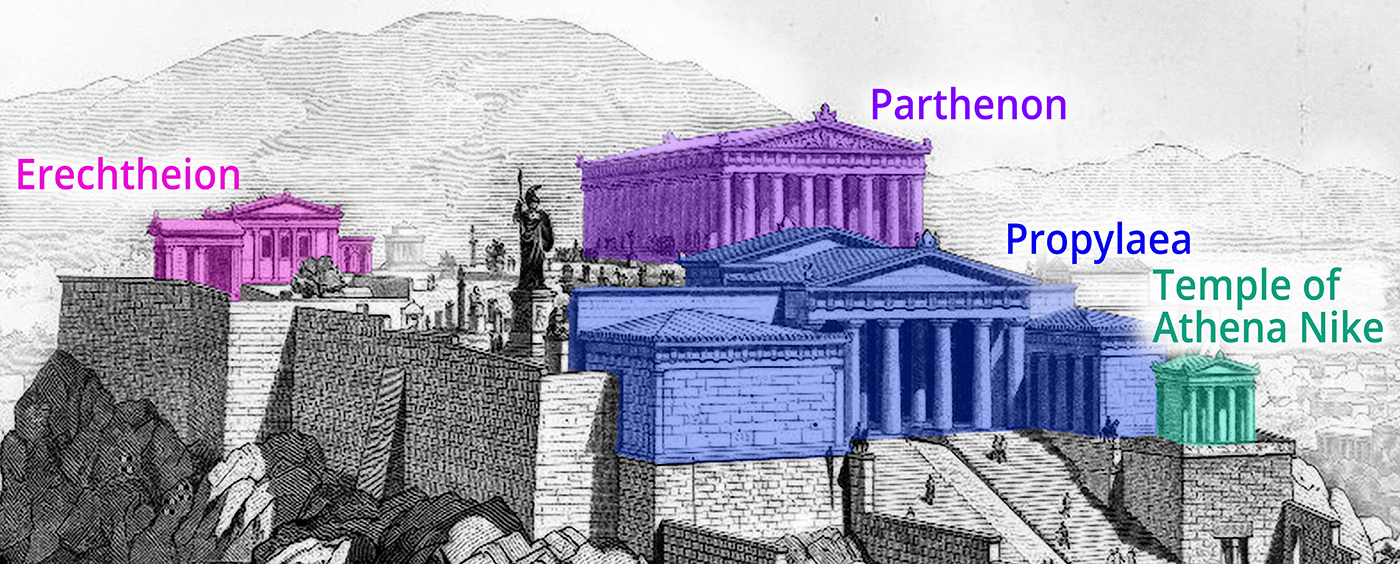
The temple of Athena Nike is the smallest temple at the Acropolis in Athens(of the four temples at the Acropolis).Pictured:(https://www.flickr.com/photos/profzucker/12881046455/in/photostream/lightbox/) Its construction was completed in the year 420 B.C.E. The temple, as with all Greek temples, was considered a home of deity which was represented in its statue. This was not a place where regular people. Believers simply used this place to perform rituals in the front of the temple.The privilege of the temple was reserved for the priestesses, who had a respected position in the Greek society. Placed on the southwest corner, this temple dedicated to the goddess Athena, in relation to her powers of victory. The victory was likely connected to the Greeks victory over the Persians about 50 years earlier. Athena, who herself usually has wings, was sculpted here with no wings to represent her never leaving Greece and her people.
The temple was also known as the pearl of the acropolis. It's placement is considered highly vulnerable, but is at the same time placed well for defense because it over looks a massive cliff on its' side. The temples location was also believed to be used as a ritual location prior to its construction, giving it a "special" energy.
The temple of Athena Nike was constructed with a special marble which was prized for its golden white color, known as White Pentelic. Unlike the other temples at the Acropolis, the Temple of Athena only has columns at the front and back of the structure. The columns are monolithic, which means they each were made with a single block of stone. It's small size makes this possible, to where as the others need side columns to support their much larger frame.

I made the image large for hopes you can see the detail at the top of the temple. On the east side of the temple, the decoration represents the gathering of the gods. The southern wall represents a battle between the Greeks and Persians. The remaining sides represent battles between Greeks and various others.


Great job portraying the information! It was easy to read an I learned quite a bit about this temple.
ReplyDelete