The Etruscan Civilization
https://smarthistory.org/the-etruscans-an-introduction/
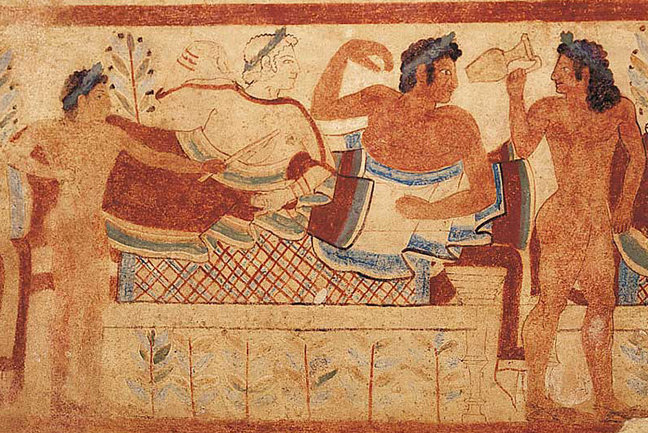
remains they left in burial tombs.Arguably the greatest legacy of their civilization was their beautifully painted tombs. These paintings represent lively and colorful scenes from the mythology of the Etruscan, their daily life, heraldic figures, and on a rare occasion, even the tombs deceased's life was depicted on the walls. These paintings were the core reason we were able to learn about their culture and helped us make out a rough structure of their lifestyle and customs. 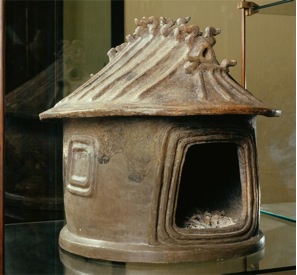
https://smarthistory.org/the-etruscans-an-introduction/
The Etruscan's' believed heavily in the afterlife of the deceased. The picture above is an Etruscan hut urn, the ashes from the deceases creamery were put inside. The hut urn was made from an unrefined clay called Impasto. From this we have an idea of what the homes of these people looked like, oval with a timber roof, and a smoke hole for internal heat.


Hi Marcus! I find it cool how the Etruscans correlated the design of their homes with the hut urn. It sounds like they put a ton of effort in to making sure the tombs were suitable for the person that was soon to be resting there. I wonder how high of an honor it was to be able to paint and decorate the tombs.
ReplyDeleteThat was a great post! It's a very interesting article and I love the information you gave about all of the urn huts, I actually wrote about those as well. They're such a personal concept for your deceased loved ones, I really feel like we should be able to do more of that these days too, we want to let loved ones remember how much we loved them so why not!
ReplyDeleteHey Marcus!
ReplyDeleteI enjoyed reading your blog post about the Etruscan culture and their contributions to Ancient Roman art! A couple things that I think worked well is that you compared the historic location to a modern day cite, and that your selected artwork photograph was displayed in the beginning of your post. Something uniquely different with this culture, compared to others we’ve previously learned about is that they cremate the bodies of their deceased. I thought it was interesting to learn about the hut urn Etruscan's used.
-Autumn Fink
Hi Marcus,
ReplyDeleteThis a really interesting post about Etruscan art. I notice some similarities between many other cultures in the art in the Mediterranean. I wonder if this indicates an exchange of ideas and culture (as well as some monetary exchanges) between cultures with access to the sea. I noticed that you started your article with an assumption about the general knowledge of the Rome Republic. In academic writing I believe that is an excellent chance to add some background and information about the region to help the reader relate to your writing. I also think this was an good chance to add some length to your writing as well as include another potential source, which, from student to student, makes some later sections a lot easier when you aren't as worried about meeting length requirements.
Thanks for the tip! I appreciate that!
Delete